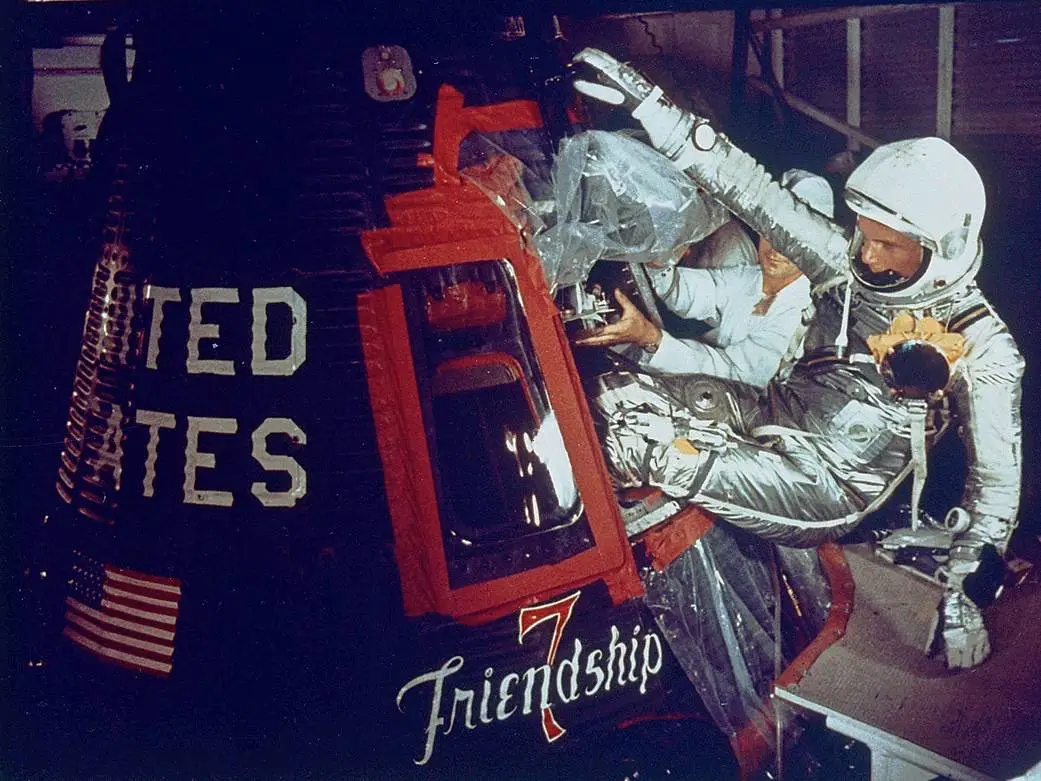
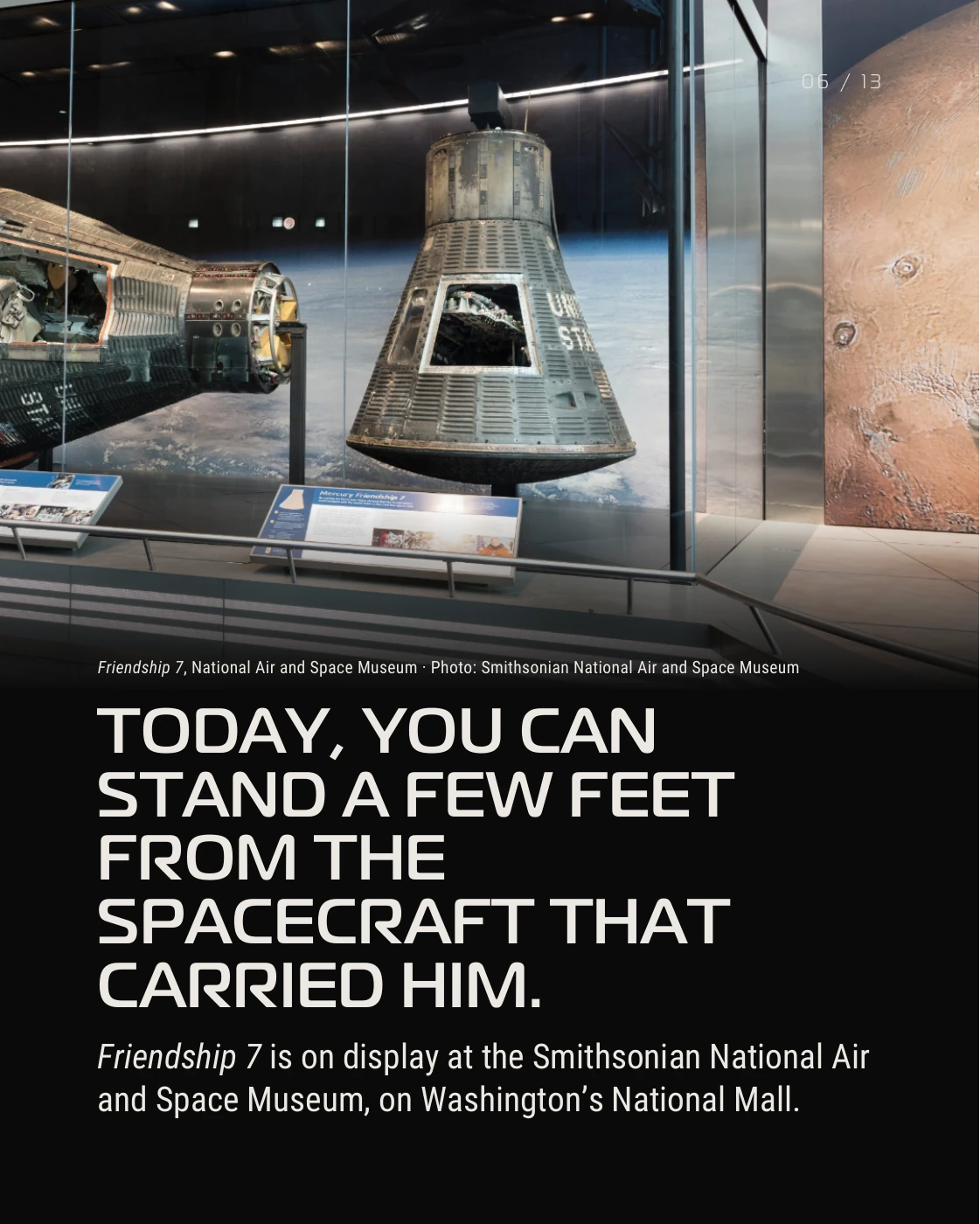


You can stand a few feet from Friendship 7 at the Smithsonian National Air and Space Museum in Washington, D.C.
The spacecraft is remarkably small. Not much bigger than a telephone booth, with barely enough room for a single astronaut, it looks almost impossibly modest for something that helped change the course of human history.
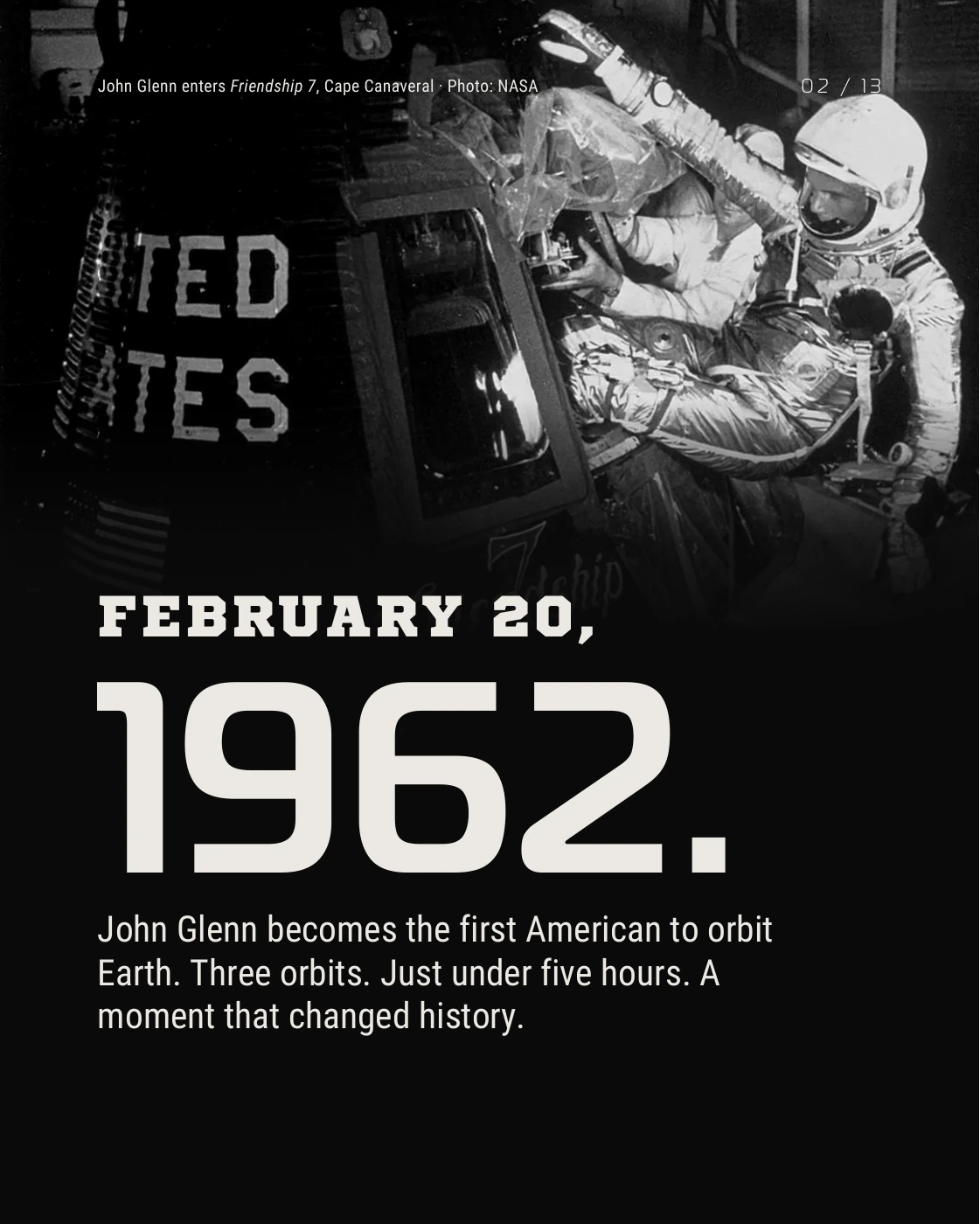
On February 20, 1962, John Glenn climbed inside that capsule and became the first American to orbit Earth. He circled the planet three times, traveling more than 75,000 miles in just under five hours.
The world watched.
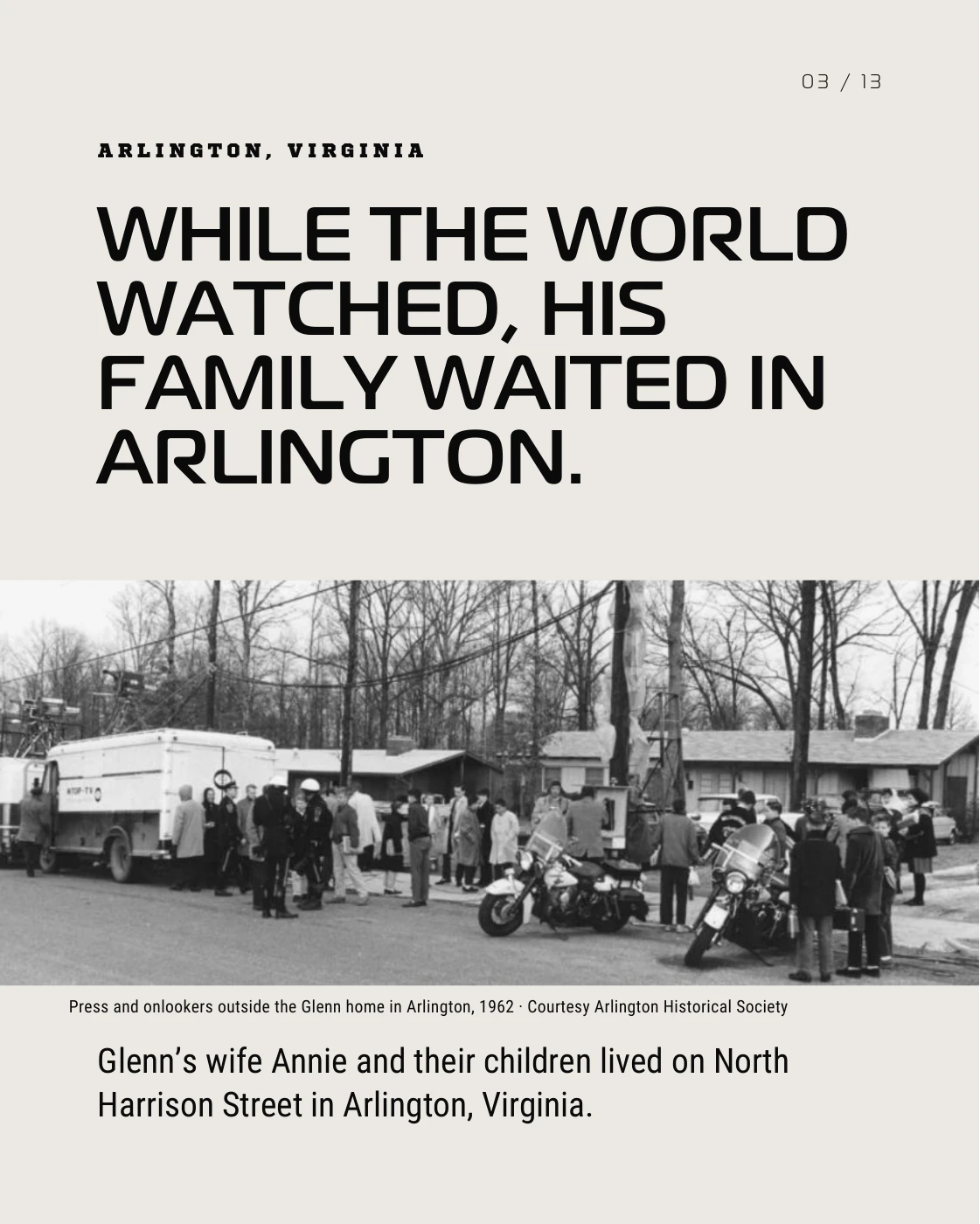
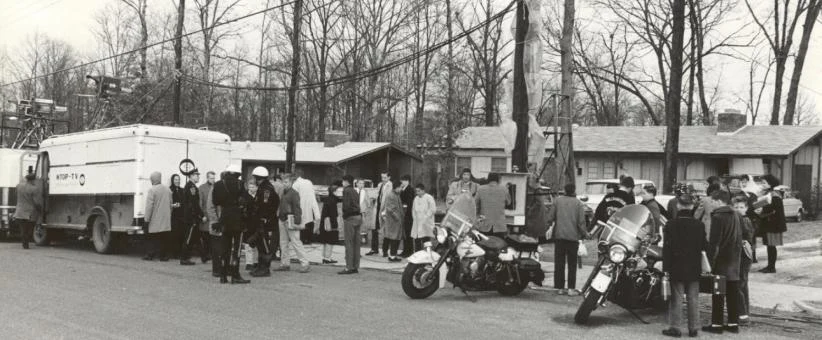
And a few miles away, in a house on North Harrison Street in Arlington, Virginia, Glenn's wife Annie and their children waited for him to come home.
It's a detail that makes an extraordinary moment in history feel suddenly, wonderfully local.

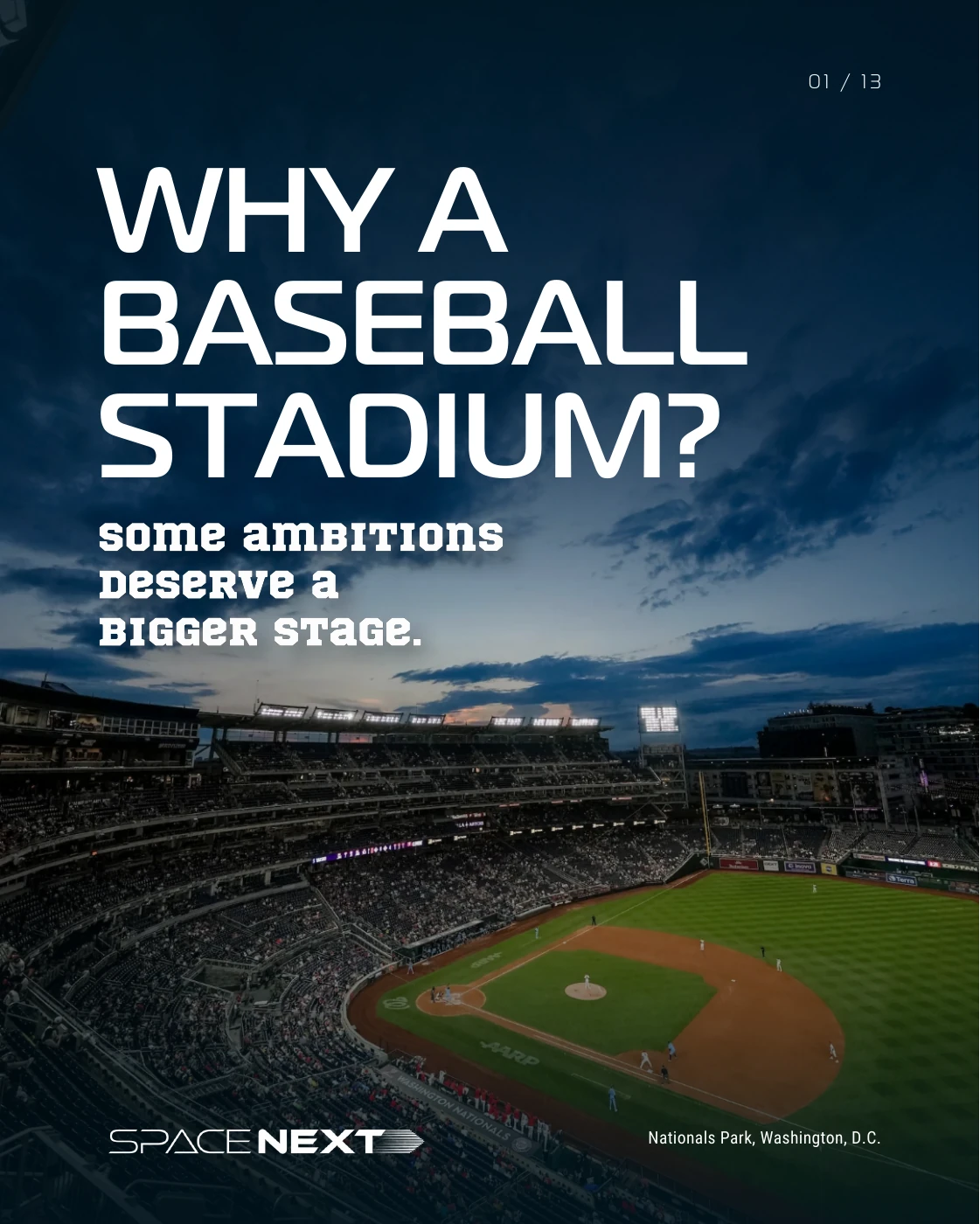
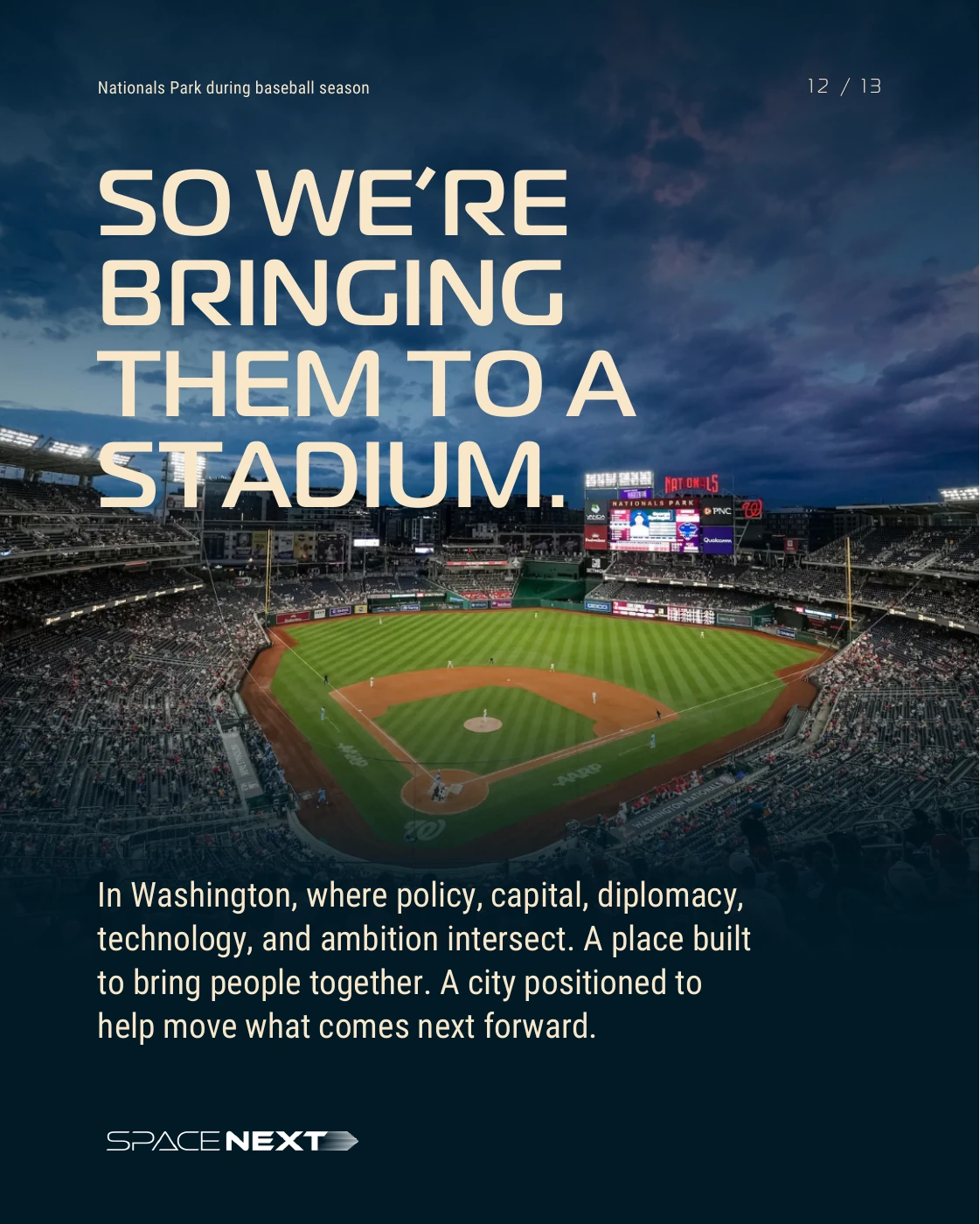
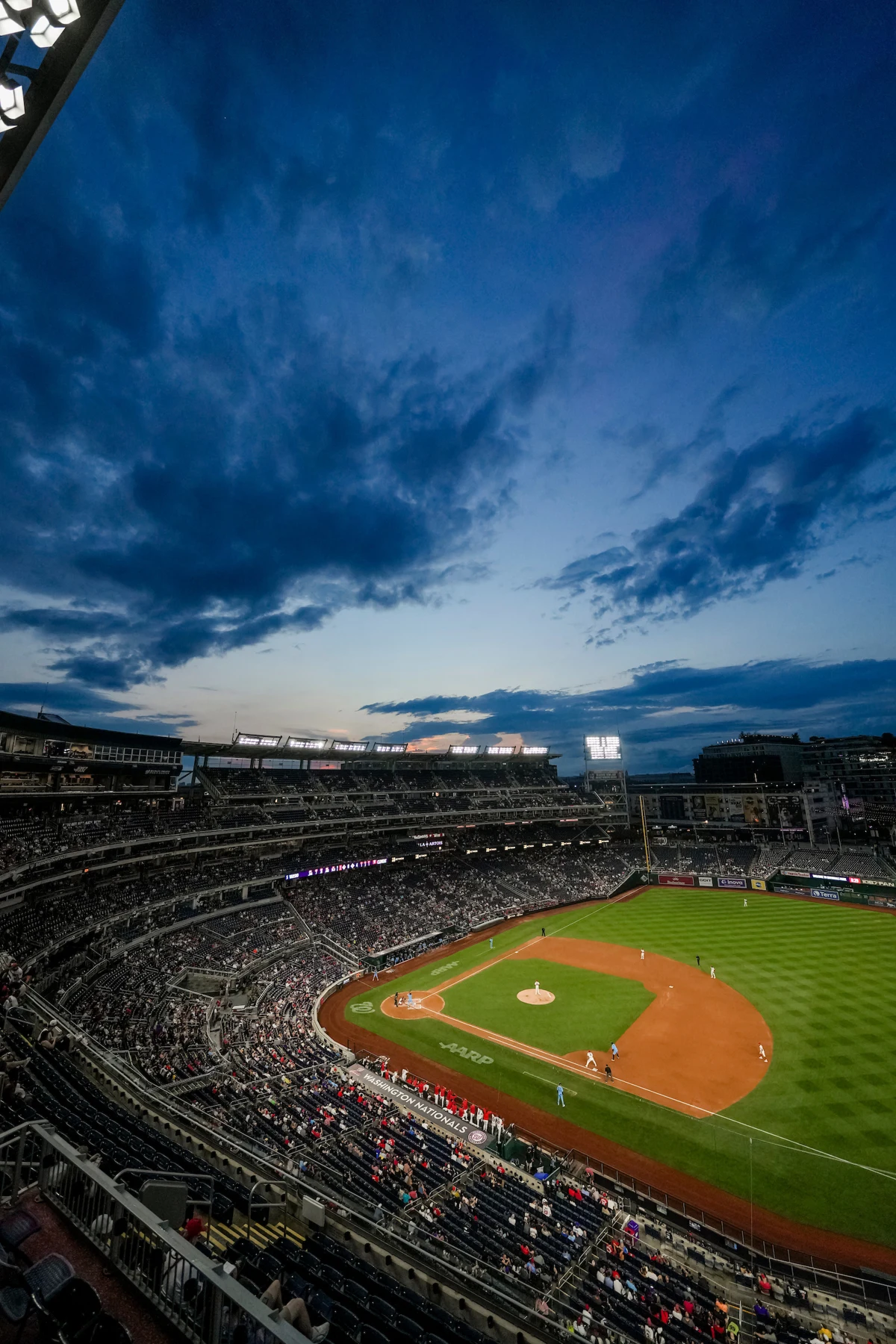
Sixty-five years later, just days before the anniversary of Glenn's flight, we're bringing spaceNEXT to another Washington landmark: Nationals Park.
A baseball stadium might not be the first place you'd expect to find the people building the next space economy. Then again, a football stadium probably wasn't the obvious place to announce America's ambitions for the Moon.
But we'll get to that.
1962: A remarkable year, closer to home than you might think.
John Glenn's historic flight was a triumph of human courage. It was also the product of years of mathematics, engineering, experimentation, and coordination involving thousands of people whose names would never become household words.
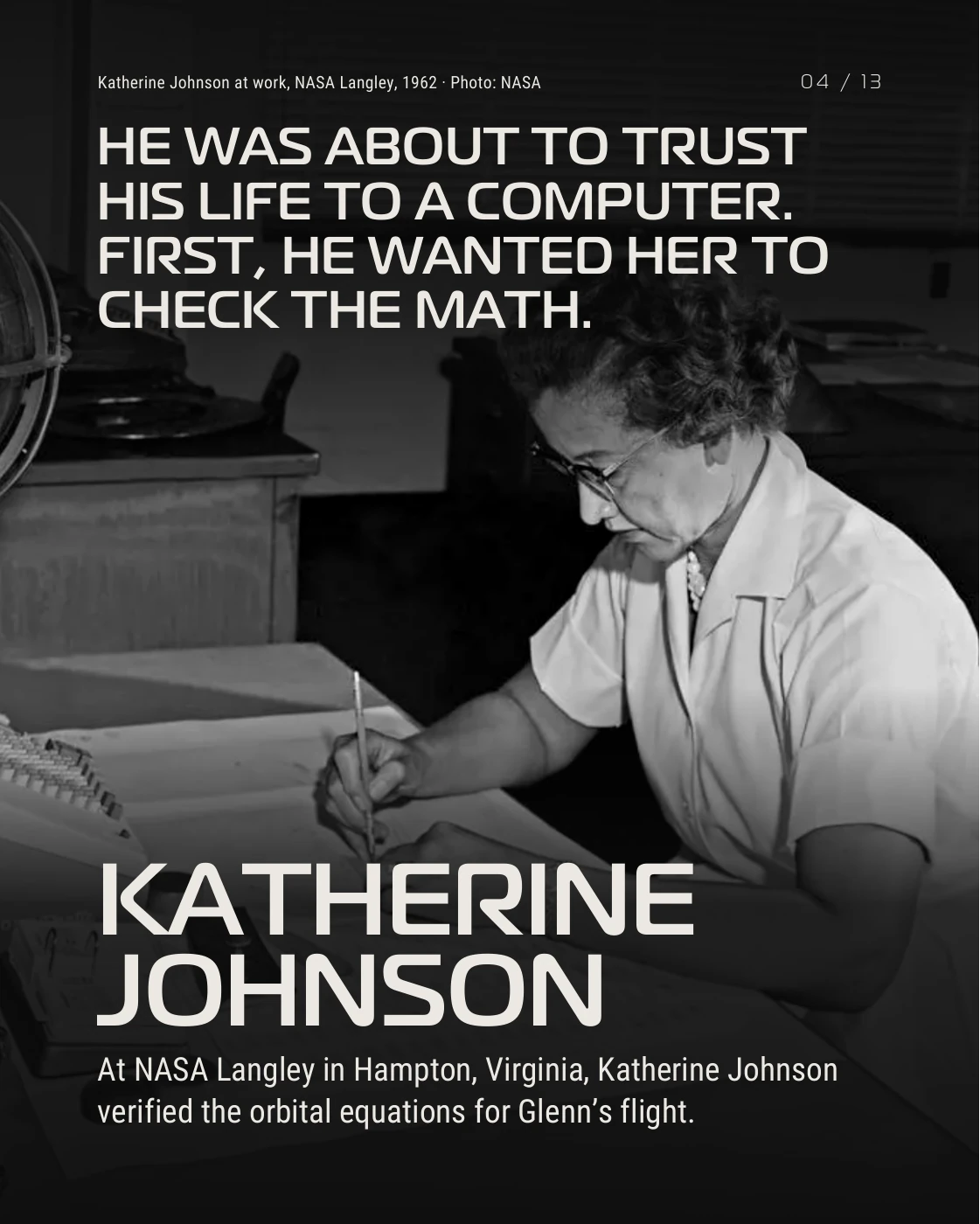
Among them was Katherine Johnson.
Working at NASA's Langley Research Center in Hampton, Virginia, Johnson had helped develop the calculations that made human spaceflight possible. As Glenn's mission approached, NASA's new electronic computers were responsible for calculating the trajectory that would carry him into orbit and safely back to Earth.
Glenn wanted Johnson to check the numbers herself.
She did.
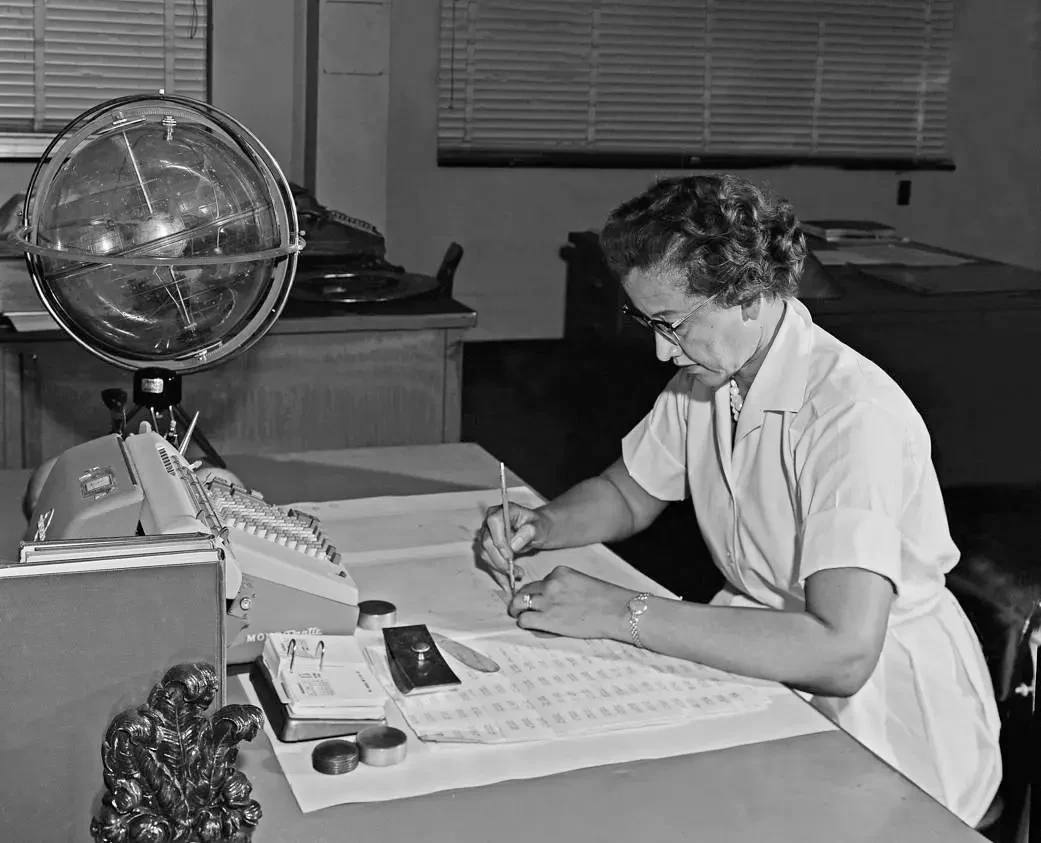
It's one of the great stories of the early space program: an astronaut preparing to ride a rocket into orbit, asking a mathematician to verify the work of machines that represented the cutting edge of technology.
That flight also depended on a worldwide tracking and communications network connecting stations across the globe to computers in Washington, Cape Canaveral, and Bermuda. Even then, before anyone had set foot on the Moon, spaceflight required international infrastructure, shared technical capabilities, and extraordinary coordination among people separated by thousands of miles.
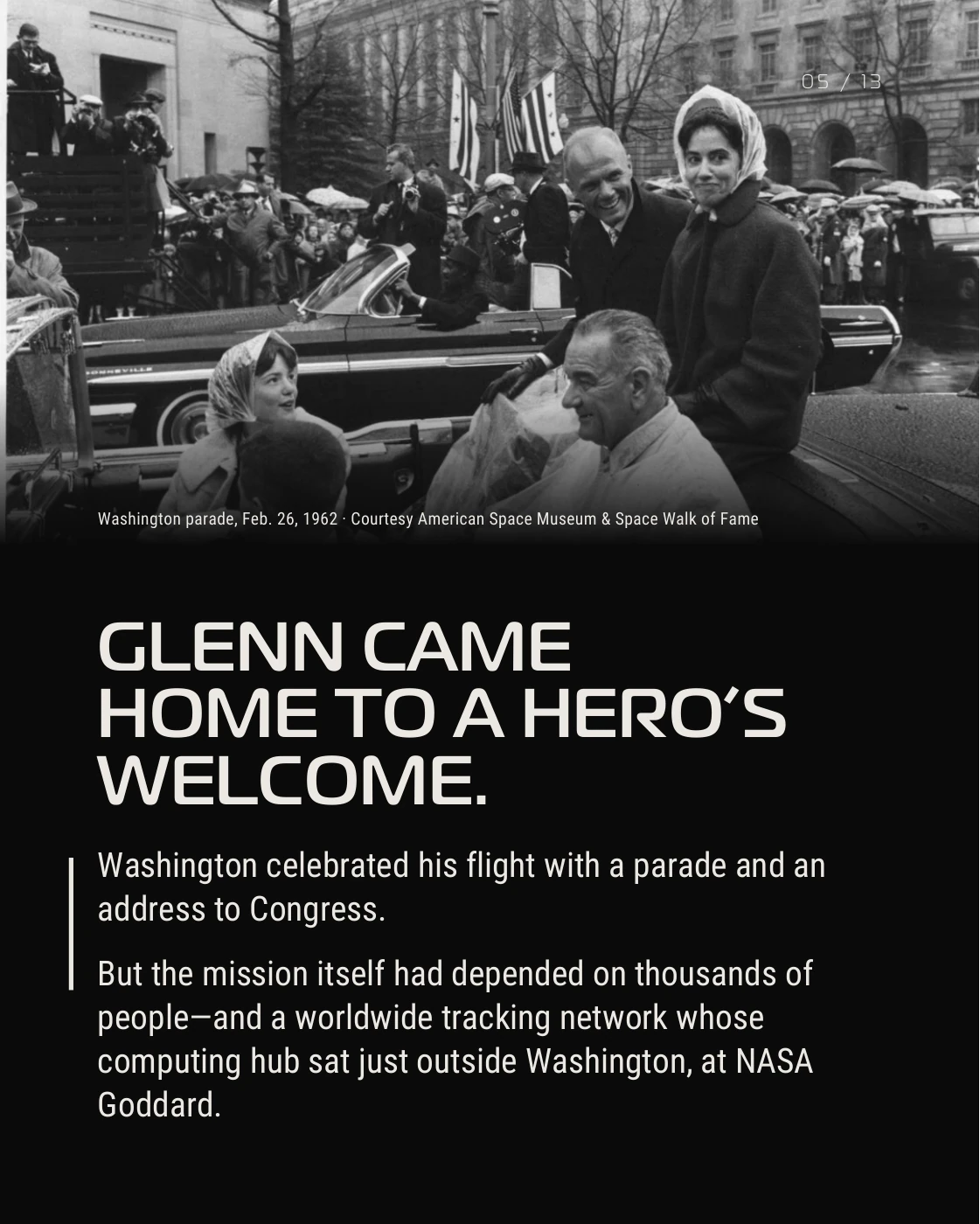
Glenn trained at Langley, but his family called Arlington home. After his successful flight, he returned to Washington for a hero's welcome, a parade, and an address to Congress.
Today, the little spacecraft that carried him into history rests on the National Mall.
It's a fitting reminder that Greater Washington's connection to space has never been limited to the government agencies headquartered here. The people who made the first Space Age possible lived in our neighborhoods, worked across our region and beyond, and helped establish capabilities that would transform life on Earth.
And we're still building on their work.
From reaching space to making something of it.
The achievements of the first Space Age were extraordinary by any measure.
We learned to put humans into orbit, walk on the Moon, operate spacecraft across vast distances, and build the technologies that made modern satellite communications, navigation, weather forecasting, and countless other capabilities possible.
Apollo, in particular, demonstrated what a nation could accomplish when it concentrated enormous resources and talent on a goal that had once seemed almost absurd.
But the space economy taking shape today is asking us to think differently.
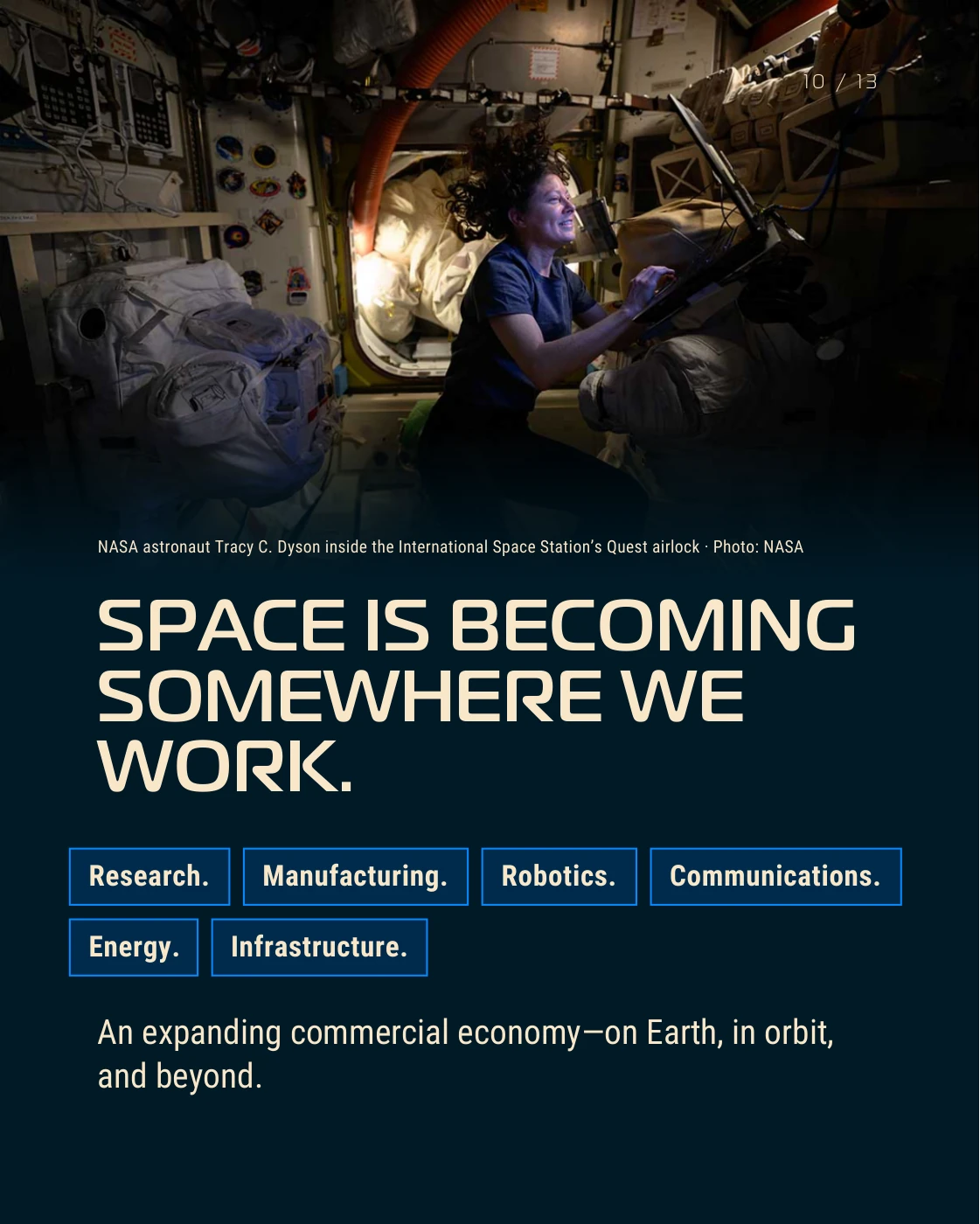
For much of the past century, space was principally somewhere we went to explore, observe, or establish a strategic capability. Increasingly, it's becoming somewhere we can work.
Research conducted in microgravity. Manufacturing processes that take advantage of conditions impossible to reproduce on Earth. New communications networks, autonomous systems, commercial space stations, and the transportation, energy, logistics, and supporting infrastructure that make sustained operations possible.
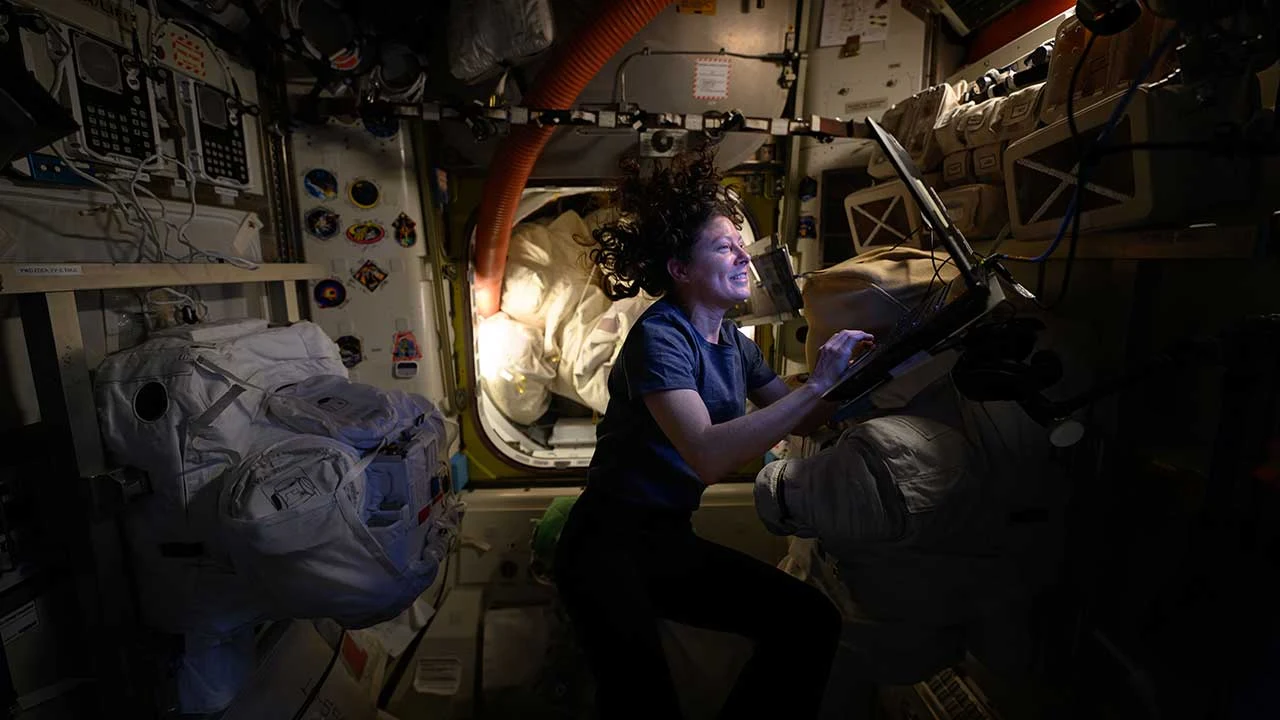
Some of these markets are established and growing. Others remain experimental, with technological and economic hurdles still to overcome. And some of the businesses that will eventually define the next Space Age probably haven't been conceived yet.
That's part of what makes this moment so interesting.
The possibilities extend well beyond the traditional aerospace sector. Companies developing advanced materials, robotics, autonomous vehicles, energy systems, artificial intelligence, and next-generation manufacturing may find that their expertise has applications in space—or that technologies developed for space open new markets here on Earth.
And with those possibilities come some decidedly terrestrial questions.
Who pays for the infrastructure? What makes a viable business model? How do emerging companies find customers and capital? What regulations and standards will allow commercial activity to expand safely? Who assumes the risk? How do we develop the workforce and supply chains?
What does it take to turn a technological breakthrough into an industry?
A rocket can get you into space. It takes an extraordinary amount of additional work to build an economy there.
That work belongs to a much wider community than most people realize.
Competition got us to the Moon. Cooperation will help us build what comes next.
The first race to the Moon was shaped by the Cold War, and the competition for technological leadership remains very much alive today.
Space is an increasingly consequential arena for national security, economic influence, and commercial advantage. Governments have strategic interests to protect. Companies have markets to win. None of that is going away.
But there's a parallel story unfolding, and it deserves just as much attention.
Across the United States and around the world, governments and commercial enterprises are finding ways to cooperate on infrastructure, communications, navigation, research, and technical standards.
They have to.
A viable space economy will need interoperable systems, reliable transportation, common approaches to safety, access to capital, and supply chains capable of supporting activity across enormous distances.
Those requirements do not neatly respect national borders or corporate boundaries.
A company developing a new orbital manufacturing capability may need a launch provider, a research partner, a source of financing, a regulatory pathway, and customers who understand the value of what it produces. A government investing in space infrastructure may depend on commercial technologies developed by companies operating across several countries.
And an entrepreneur working on a problem in a completely different industry may hold a piece of the solution that neither of them has considered.
That's where things get interesting.
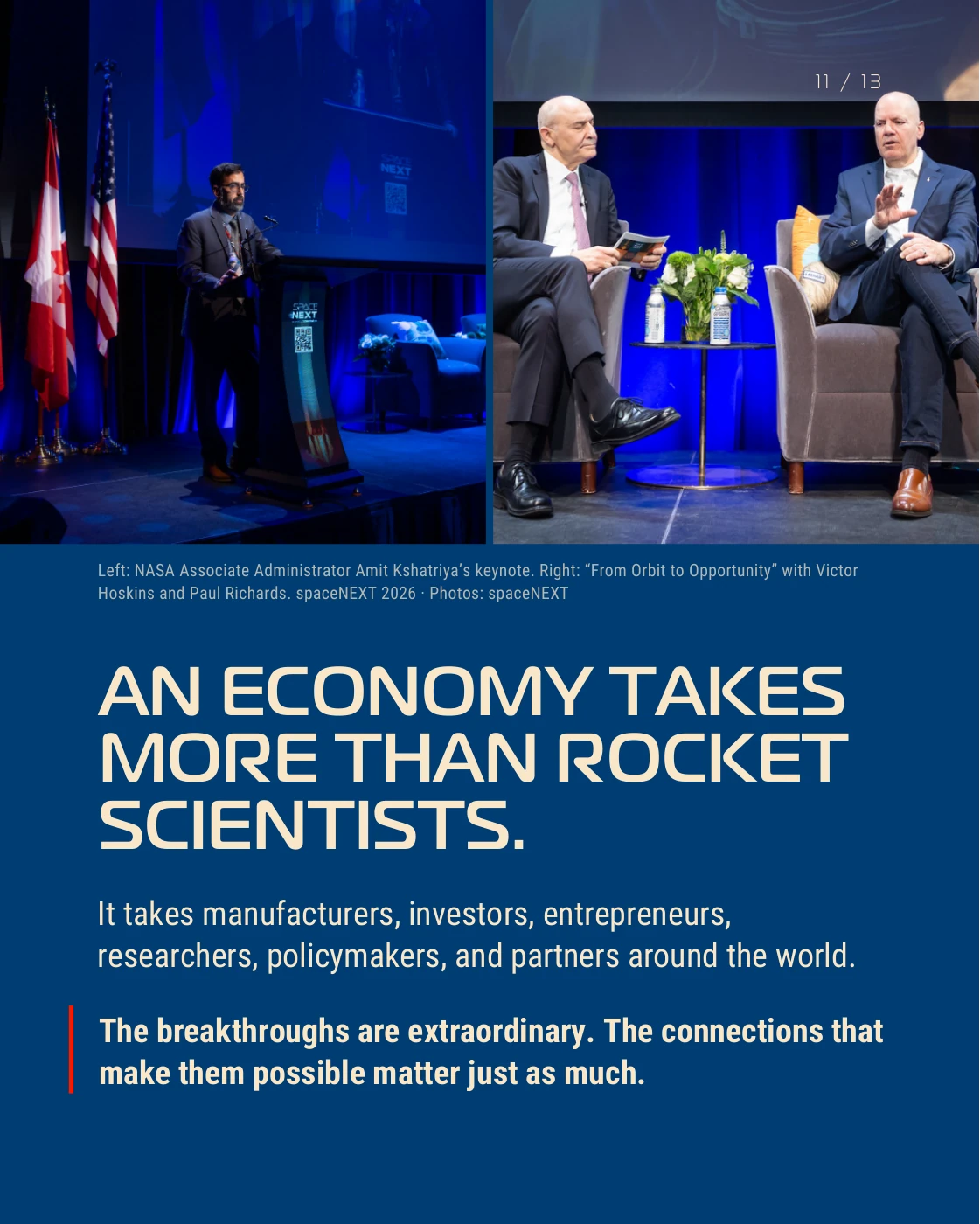
The future of the space economy won't be determined exclusively by what happens in laboratories, on launchpads, or in orbit. It will also depend on the relationships, investments, partnerships, and decisions that connect those innovations to the rest of the world.
Which brings us back to Washington.
Why here? Because Washington has always been part of the story.
Greater Washington occupies a remarkable position in the space economy.
NASA headquarters, federal research and regulatory institutions, national security organizations, international embassies, universities, major aerospace companies, startups, investors, and technology firms all operate within a region with deep connections to the global space industry.
The region also benefits from its proximity to Virginia's broader aerospace capabilities, including NASA Langley and the growing commercial space activity at Wallops Island.
Few places bring together such a concentration of the people who develop space technologies, establish policy, allocate resources, negotiate international partnerships, and make investment decisions.
And that proximity matters.
A conversation that begins with a researcher explaining a new capability can become something very different when an investor, a manufacturer, or a potential government customer joins it.
Sometimes the most consequential connection isn't between two people working on the same problem. It's between people who didn't realize they had something to offer each other.
That's the opportunity spaceNEXT is designed around.
Not simply assembling prominent speakers or showcasing impressive technology, but bringing together the people with the expertise, capital, influence, and determination to move ambitious work forward.
From across the United States and around the world.
In a city where those conversations can have consequences far beyond its borders.
And why a baseball stadium?
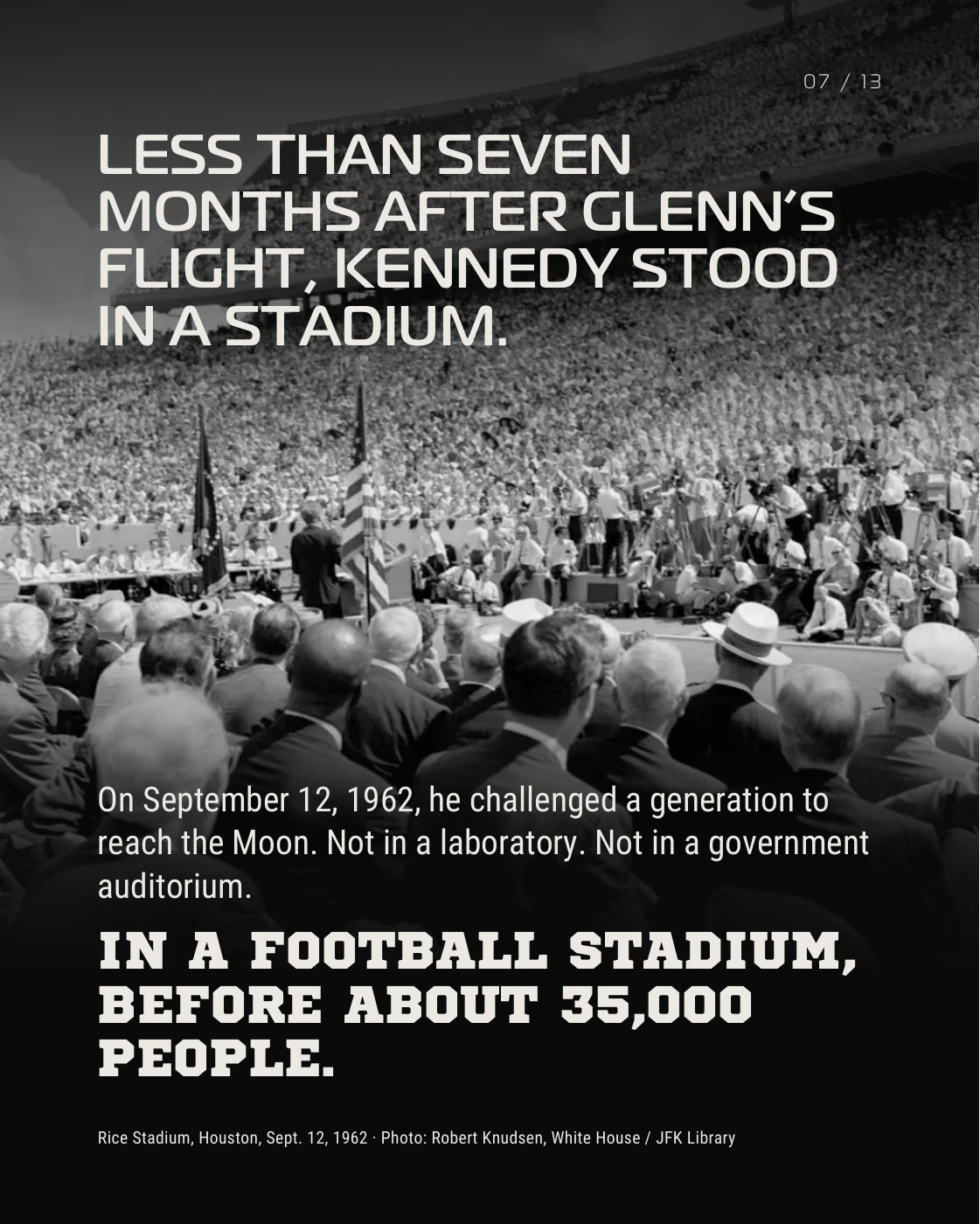
On September 12, 1962, less than seven months after Glenn's historic flight, President John F. Kennedy stood at Rice Stadium in Houston and challenged the United States to send astronauts to the Moon before the decade was out.
It's one of the most famous speeches of the twentieth century.
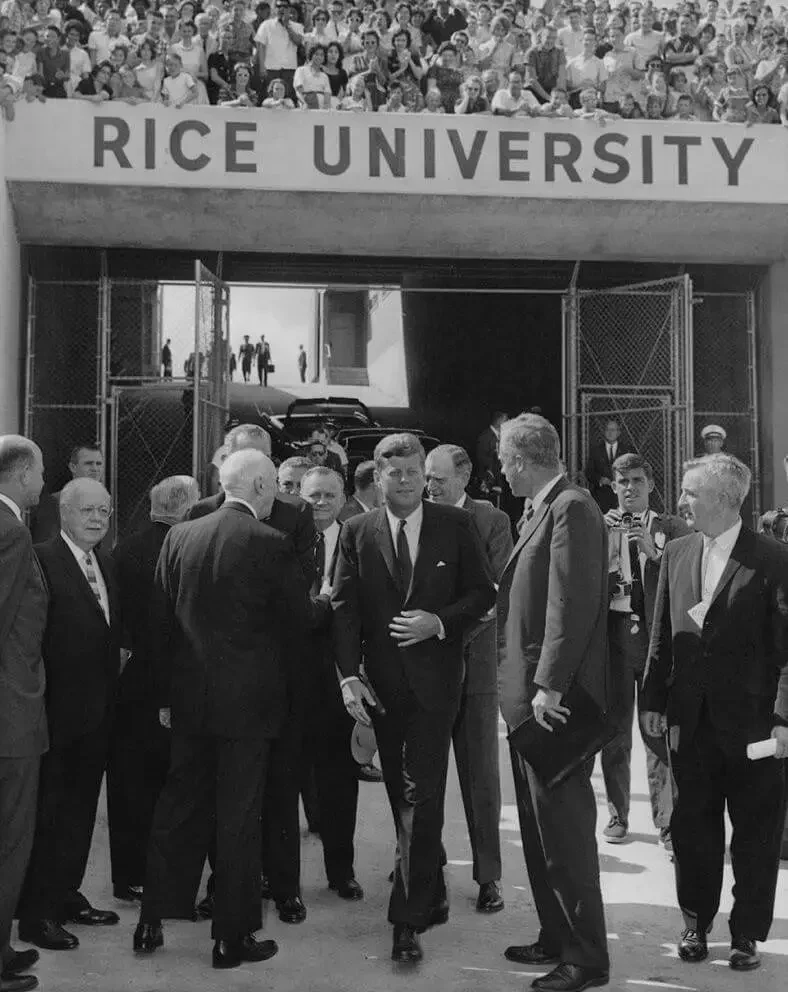
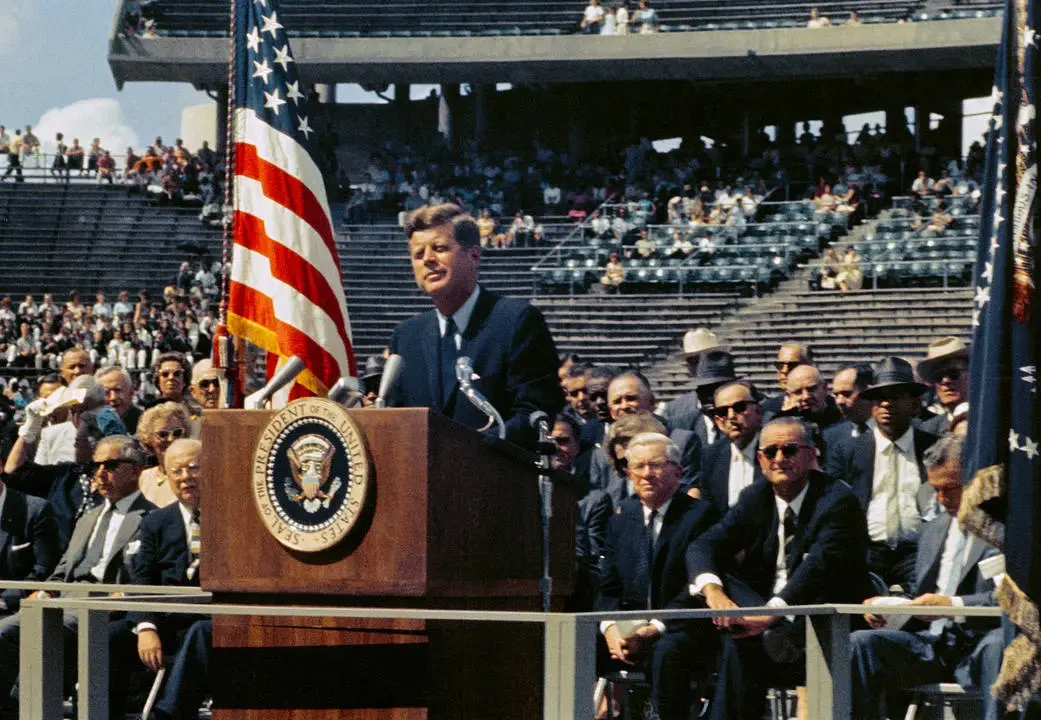
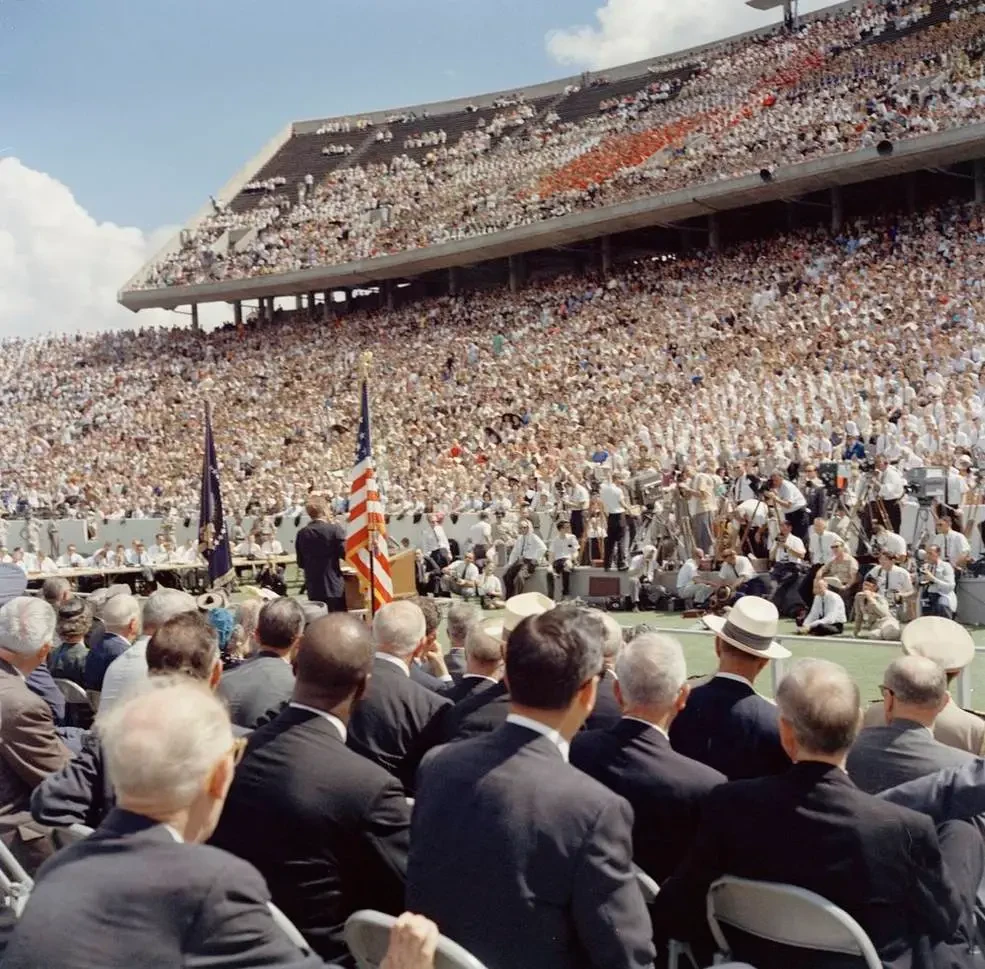
Kennedy spoke about science, national ambition, technological progress, and the difficult work ahead. He acknowledged the enormous expense and the very real uncertainties surrounding the effort.
And somewhere in the middle of making his case for one of humanity's boldest undertakings, he asked a rather wonderful question:
"Why does Rice play Texas?"
It was a football joke, delivered to a hometown crowd. But it belonged in the speech.
Kennedy was arguing that difficult things were worth attempting precisely because they demanded more of us. Because they required ingenuity, discipline, courage, and an ability to accomplish things together that none of us could accomplish alone.
He chose to make that argument in a stadium.
Not a laboratory. Not a government auditorium. Not a room reserved for the scientists and engineers who would be responsible for making it happen.
A stadium.
A place where people gather with the peculiar, deeply human expectation that they might witness something extraordinary.
Of course, we're not suggesting that a baseball conference venue is the modern equivalent of Kennedy's Moon challenge. History doesn't work that neatly.
But there's something about the setting that feels right.
A ballpark is a place where an entire city can come together. It's familiar without being ordinary, grand without being inaccessible. And even if you've never cared much for baseball, you understand the sensation of walking into a stadium and feeling the scale of what it was built to hold.
At Nationals Park, we have an opportunity to bring that same sense of possibility to a gathering of people doing genuinely consequential work.
People from different industries and different countries. Established leaders and ambitious newcomers. Scientists who understand what might be possible, entrepreneurs determined to prove it, and the partners who can help make it real.
People who may arrive with very different ambitions, but discover something worth building together.
And yes, there's a little wonder in it, too.
We shouldn't lose that.
The space economy is a serious undertaking, involving enormous investment, complicated risks, difficult policy questions, and technologies that require extraordinary precision.
But at the heart of it is the same curiosity that sent Glenn into orbit, inspired Johnson's calculations, and brought thousands of people to their feet in a Houston football stadium 65 years ago.
The belief that the boundaries of what we know and what we can accomplish are not fixed.
That there is still so much left to discover.
And that the most exciting part of the next Space Age may not be where we go, but what we make possible along the way.
In February, we'll gather at Nationals Park, just a few miles from the little spacecraft that helped open the first Space Age.
We know far more about space than the people who watched Glenn's flight in 1962 could have imagined. But there is still a great deal we don't know about the economy that will emerge beyond Earth, or the industries, discoveries, and opportunities it will create.
That's what makes this moment worth gathering for.
The next Space Age isn't something we simply witness. It's something we shape.
And we'd like you to be part of it.